
Struggling to understand viscosity? Bad data from the wrong test can lead to product failure and high costs. This guide simplifies viscosity measurement to ensure you get it right.
A viscometer is an instrument used to measure a fluid's viscosity, or its resistance to flow. Choosing the right type and method, like capillary or rotational, and controlling factors like temperature are essential for accurate, reliable results that improve product quality.
Over my years in this industry, I've seen how mastering viscosity can transform a business. It's not just about getting a number; it's about getting the right number, consistently. This guide is a practical starting point, based on the questions I hear most often from professionals just like you. Let's make sure your measurements are accurate and meaningful.
What's the Difference Between Kinematic and Absolute Viscosity?
Are you confused by terms like "kinematic" and "absolute" viscosity? Using the wrong value can lead to incorrect formula calculations and failed quality checks. Let's clarify the difference.
Absolute (or dynamic) viscosity is the fluid's internal resistance to flow, measured in centipoise (cP). Kinematic viscosity is the absolute viscosity divided by the fluid's density, measured in centistokes (cSt).
Think of it this way: absolute viscosity measures the force needed to move a fluid, while kinematic viscosity measures how fast it moves under the force of gravity. A rotational viscometer, like the ones we at Martests specialize in, directly measures absolute viscosity. A glass capillary viscometer, which relies on gravity, measures kinematic viscosity. Understanding this difference is crucial because some industry standards require one, while others require the other.
| Feature | Absolute (Dynamic) Viscosity | Kinematic Viscosity |
|---|---|---|
| Definition | A fluid's internal resistance to shearing force. | The ratio of absolute viscosity to fluid density. |
| Common Units | Centipoise (cP), Pascal-seconds (Pa·s) | Centistokes (cSt), square meters per second (m²/s) |
| Concept | How "thick" a fluid is, regardless of its weight. | How easily a fluid flows under gravity. |
| Typical Test | Rotational Viscometer | Capillary Viscometer |
What Are the Common Viscosity Testing Methods?
Are you using the right test method for your specific fluid? Applying a test designed for oil to a product like paint will give you meaningless data and ruin your quality control.
Common methods include capillary tests for Newtonian fluids, rotational tests for both Newtonian and non-Newtonian fluids, and falling sphere tests for simple, transparent liquids. Each method suits different applications and fluid types.
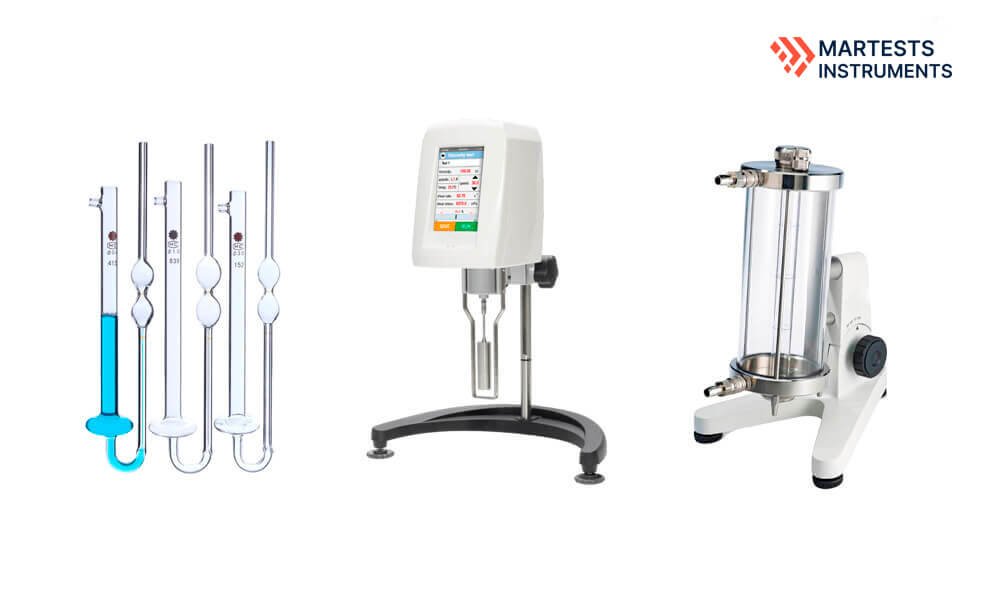
The method you choose depends entirely on what you are measuring and why. For a simple oil, a basic method works. But for a complex polymer or paint that changes viscosity under stress, you need a more sophisticated approach. Let’s look at the main ones.
Capillary (Glass) Viscometer Test
This classic method involves timing how long it takes for a set volume of fluid to flow through a narrow glass tube under gravity. It's simple, inexpensive, and highly accurate for Newtonian fluids (like water and oils) where viscosity doesn't change with flow rate. It directly measures kinematic viscosity.
Rotational Viscometer Test
This is the most versatile method. It works by rotating a spindle in the fluid and measuring the torque (resistance) required to maintain a constant speed. It measures absolute viscosity and is essential for non-Newtonian fluids like creams, ketchup, and coatings, as you can see how viscosity changes at different speeds (shear rates).
Falling Ball and Falling Piston Viscometer Tests
These methods measure viscosity by timing how long it takes for an object (a ball or piston) to fall through a fluid under gravity. It's a simple and quick way to get a viscosity value, often used for quality control of transparent fluids like oils and resins.
Other Test Methods
More specialized methods exist, like vibrational viscometers that use a resonating probe. These are often used for in-line process control where continuous measurement is needed.
What Are the Main Types of Viscometers?
Do you need a quick check in the field or a high-precision lab measurement? Buying a large, complex lab viscometer when you need a simple, portable one is a waste of money and space.
Viscometers can be categorized by their application: portable for on-the-go checks, small onsite units for factory floors, full-service lab models for R&D, and inline viscometers for continuous process monitoring.
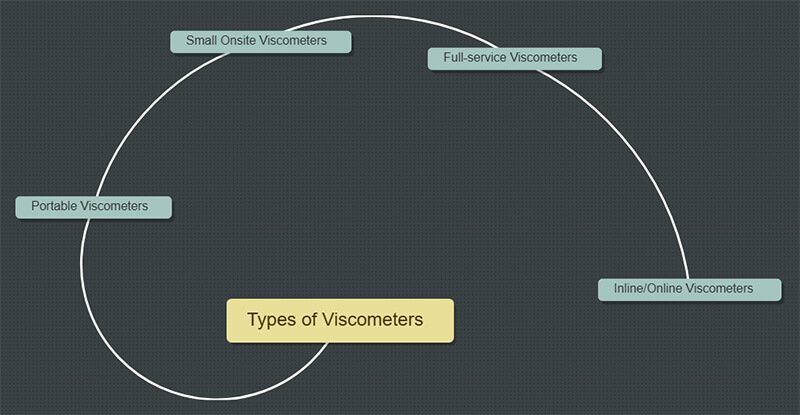
Matching the instrument to the environment is as important as matching it to the sample. A customer of mine, a paint manufacturer, uses three different types: a portable one for their sales team, an onsite one on the production line, and a full-service one in their R&D lab.
Portable Viscometers
These are handheld, battery-operated devices designed for quick and easy measurements in the field or on the factory floor. They are perfect for spot checks but generally offer lower precision than lab instruments.
Small Onsite Viscometers
These are more robust than portable models but simpler than full-service lab units. They are designed to withstand the tougher environment of a production area and provide quick, reliable pass/fail QC checks right where the product is being made.
Full-service Viscometers
These are the highly accurate, versatile benchtop instruments you find in a quality control or R&D lab. They offer a wide range of speeds, temperature control options, and data analysis capabilities. This is the category where most of our Martests rotational viscometers excel.
Inline/Online Viscometers
These instruments are installed directly into pipes and tanks to provide continuous, real-time viscosity data 24/7. They are essential for automating process control in industries like food, chemical, and petroleum manufacturing.
What Factors Can Affect Your Viscosity Measurements?
Are you getting inconsistent readings and don't know why? Often, the problem isn't the viscometer itself but small, overlooked factors that can ruin the accuracy of your results.
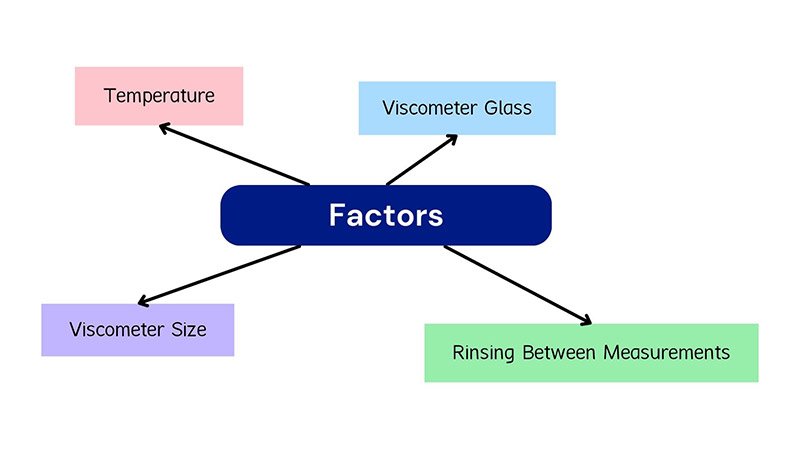
Temperature is the most critical factor affecting viscosity. Other key influences include the cleanliness of the equipment, using the correct viscometer size or spindle, and proper rinsing between measurements to avoid cross-contamination.
I cannot stress this enough: control your variables. I once spent a week helping a client troubleshoot inconsistent results. The problem? Their lab's air conditioning created a 2°C temperature draft over the sample. Once we used a water bath, the results became perfect.
Temperature
This is the number one enemy of consistent viscosity measurement. For most liquids, viscosity decreases as temperature increases. Even a 1°C change can cause a significant error. Using a temperature-controlled bath or chamber is not a luxury; it is a necessity for accurate work.
Viscometer Glass
For capillary viscometers, the glass tubes must be perfectly clean. Any residue from previous samples will alter the flow time and give you false readings. Always follow a strict cleaning protocol.
Viscometer Size
Whether it's a capillary tube or a rotational spindle, it must be the correct size for your sample's viscosity. Using a spindle designed for high viscosity on a thin liquid will result in a torque reading too low to be accurate, and vice-versa.
Rinsing Between Measurements
When testing multiple samples, you must thoroughly clean and dry the spindle or capillary tube between each test. Any leftover residue will contaminate the next sample and skew your data.
Conclusion
Mastering viscosity testing by choosing the right method and controlling key factors leads to better products. This knowledge gives your business a powerful competitive advantage in any industry.