
Struggling to understand why rotational viscometer prices vary so much? Choosing the wrong one can waste your budget and compromise your quality control. Know the key factors before you buy.
A rotational viscometer's price is determined by its performance specifications (accuracy, range), temperature control system, automation level, and structural type. Core precision and temperature control are the biggest cost drivers, defining the instrument's capability and reliability for different applications.
I was talking with a client, Jacky, who runs a large distribution business in Italy. He was looking to expand his product line with our Martests viscometers but was puzzled by the wide price range, from a few hundred to over ten thousand dollars. "Stefan," he asked, "they all seem to do the same thing. Why is one ten times more expensive than another?" It's a question I hear a lot. The truth is, they don't all do the same thing. The price directly reflects the instrument's precision, capabilities, and the problems it can solve. Let's break down exactly what you're paying for.
What Performance Specs and Accuracy Affect the Core Cost?
You see a viscometer's spec sheet, but the numbers seem abstract. Ignoring them can lead to buying a device that can't handle your samples, making it useless.
The core cost is tied to its measurement range, accuracy, and speed settings. A wider measurement range, higher accuracy, and more speed steps allow for greater versatility and reliability, directly increasing the instrument's price.
The engine of a viscometer is its core measurement system. Think of it like a car's engine—more power and precision cost more. The same is true here. These three factors—range, accuracy, and speed—determine what the viscometer can actually do.
Measurement Range
This is the span of viscosity the instrument can measure, from very thin fluids to thick pastes. A wider range means more versatility, but it requires more sensitive torque sensors, which are expensive.
Accuracy and Repeatability
Accuracy is how close a measurement is to the true value, while repeatability is how consistent the results are. For industries like pharmaceuticals, a ±1% accuracy is standard. For less critical QC, ±2% might be fine. Higher accuracy demands better engineering and calibration, adding to the cost.
Speed Range and Steps
The number of rotational speeds (RPMs) is crucial. More speed options allow you to analyze different types of fluid behaviors, like shear thinning or thickening. Basic models may have only 4 speeds, while advanced ones can have over 50.
| Feature | Basic Model | Advanced Model | Why it Matters |
|---|---|---|---|
| Measurement Range | Narrow (e.g., 100 - 100k cP) | Wide (e.g., 1 - 10M cP) | A wider range handles more types of samples. |
| Accuracy | ±2.0% of full scale | ±1.0% of full scale | Critical for R&D and regulated industries. |
| Speed Steps | 4-8 speeds | 50+ speeds | Essential for studying non-Newtonian fluids. |
How Does the Temperature Control System Add to the Cost?
Think viscosity measurement is simple? If you ignore temperature, your results will be meaningless, as even a 1°C change can alter viscosity by 10%.
Temperature control is a critical and often significant cost factor. Options range from no control for basic checks to external baths or highly precise, integrated Peltier systems for advanced research, with costs rising accordingly.
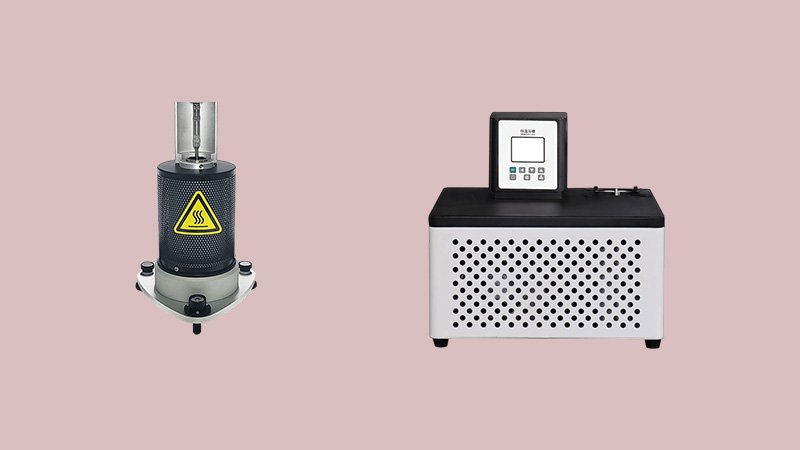
I can't stress this enough: viscosity is completely dependent on temperature. Without stable temperature, your measurements are just random numbers. That's why the temperature control system isn't just an accessory; it's a core part of achieving reliable data. The level of control you need will directly influence the total price of your setup. Your choice depends entirely on your application's sensitivity to temperature fluctuations. A customer measuring crude oil outdoors has different needs than a lab developing a new cosmetic cream.
Here's how the options break down in terms of cost and precision:
| Control Method | Description | Precision | Added Cost |
|---|---|---|---|
| None | Ambient temperature measurement only. | Very Low | None |
| External Bath | An external water or oil bath circulates fluid around the sample cup. | Good (±0.1°C) | Moderate |
| Peltier System | An integrated thermoelectric system heats and cools the sample plate directly. | Excellent (±0.05°C) | High |
| High-Temp Furnace | Used for molten materials like polymers or glass. | Specialized | Very High |
For most lab work, an external thermostatic bath is the workhorse, offering a great balance of performance and price. For high-end R&D, the speed and precision of a Peltier system are often worth the investment.
What Role Do Features and Automation Play in the Price?
See a basic dial viscometer next to a modern touchscreen model? The price gap is huge, and you might wonder if the advanced features are worth the extra money.
Modern features like touchscreens, PC software, and automated testing drastically increase a viscometer's price. They offer improved ease of use, data analysis, and repeatability, which can justify the cost for high-throughput labs.
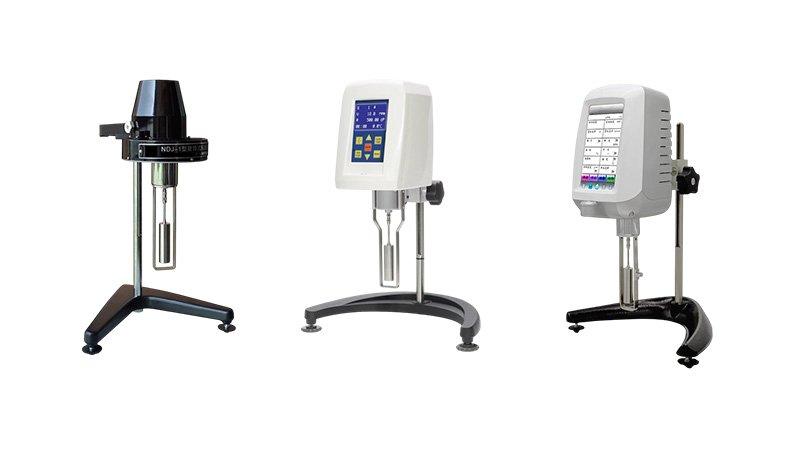
How you interact with the viscometer and process its data has evolved significantly. This evolution from manual dials to fully automated systems is a major driver of price differences. The right choice depends on your workflow, data needs, and operator skill level.
Display and Operation
From old-school analog dials to digital readouts and now full-color touchscreens, the user interface impacts usability and cost.
- Analog Dial: Requires manual calculation. Very cheap but prone to operator error.
- Digital Display: Provides a direct viscosity reading. The standard for most basic QC work.
- Touchscreen/Smart System: Offers guided workflows, built-in calculations, and data graphing. It simplifies complex tests, reduces training time, and minimizes errors.
Software Functionality
PC software unlocks the full power of a viscometer. Basic software might just log data. Advanced software, like we offer at Martests, can control the entire test, plot flow curves, perform rheological modeling, and ensure compliance with regulations like 21 CFR Part 11. This analytical power is a significant value-add and a corresponding cost factor. Investing in good software turns a measurement device into a powerful analytical tool.
How Do Viscometer Structure and Accessories Impact the Final Price?
You've chosen a viscometer, but is that the final price? The total cost can quickly increase with necessary adapters and extra spindles that are sold separately.
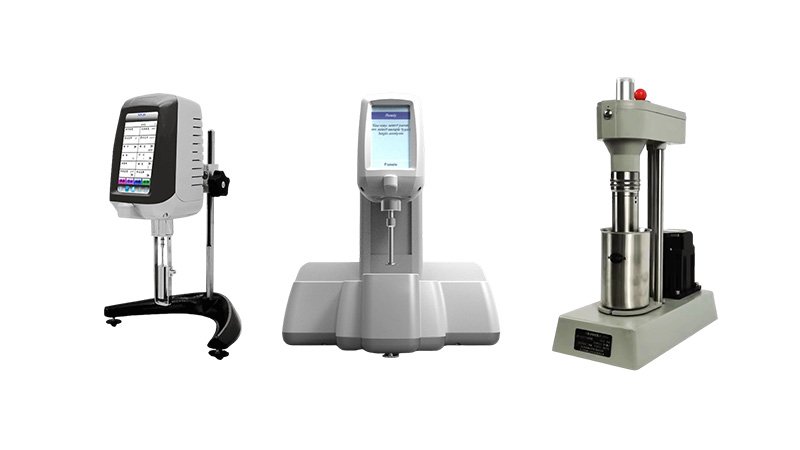
The structural type (e.g., standard, cone/plate) and the included accessories are major cost factors. Specialized adapters and spindles for small samples, low viscosities, or pastes can add significantly to the total investment.
The main unit is just the beginning. The type of viscometer and the accessories you need to run your specific samples are crucial parts of the total cost.
Structural Type
- Standard (Brookfield type): The most common and versatile, used for a wide range of applications. This is the baseline. Our Martests RV series is a perfect example.
- Cone and Plate: Ideal for small sample volumes and absolute viscosity measurements of non-Newtonian fluids. It offers precise shear rate control but at a higher price.
- Coaxial Cylinder (Cup and Bob): Best for very low viscosity fluids or samples with dispersed particles. This is a more specialized and expensive geometry.
Spindles and Adapters
A viscometer is often sold with a standard set of spindles (e.g., 4 for an RV model). However, you may need more.
- Specialized Spindles: A T-bar spindle for testing thick pastes or gels is an extra cost.
- Small Sample Adapter (SSA): If you have expensive or limited samples (like in cosmetics), this adapter is essential but adds to the price.
- Ultra-Low Viscosity Adapter (ULA): For measuring fluids as thin as water, this adapter is a required, costly add-on.
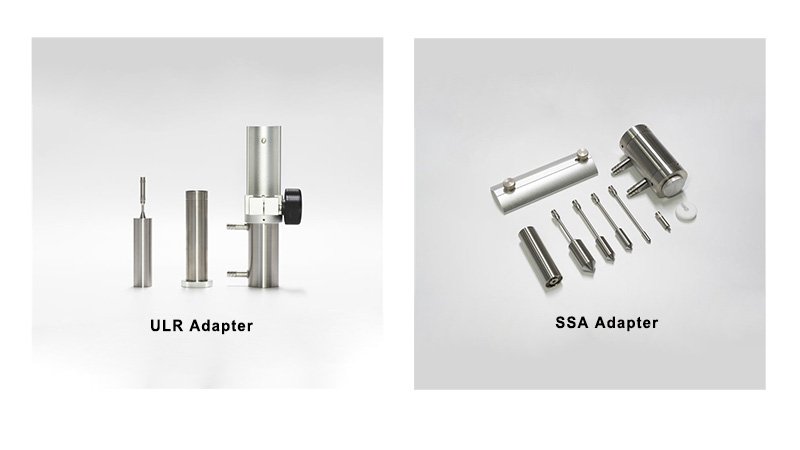
Always ask what is included in the base price and budget for the specific accessories your samples require.
What's the Simple Formula for Viscometer Pricing?
Feeling overwhelmed by all the details? You just want a ballpark estimate to understand if a viscometer fits your budget. Let's simplify it.
A viscometer's price is roughly the sum of its brand, precision, temperature control, and software. We can group these into three tiers: basic, standard, and advanced, with corresponding price ranges.
After discussing all the factors with clients like Jacky, I often summarize it with a simple formula: Price ≈ Brand + Accuracy + Temperature Control + Software. Based on my experience as a manufacturer in China, I can break down the market into three general tiers. These are estimates, but they provide a clear picture of what to expect.
Tier 1: Basic Needs
This is for simple, routine quality checks at room temperature.
- Features: Reputable Chinese brand, digital display, no temperature control, basic QC.
- Estimated Price: ~$350 to $1,400 USD.
Tier 2: Standard Lab Needs
This is the most common category, for labs that need reliable data with temperature control.
- Features: Touchscreen, external water bath, PC connectivity for data logging.
- Estimated Price: ~$2,800 to $7,000 USD.
Tier 3: Advanced R&D Needs
This is for research, development, and complex fluid analysis.
- Features: High precision, integrated Peltier temperature control, advanced rheology software for flow curve analysis.
- Estimated Price: ~$8,300 to $14,000+ USD.
By identifying which tier your application falls into, you can create a realistic budget and make a much more informed purchasing decision.
Conclusion
Understanding these factors—precision, temperature control, features, and accessories—empowers you to choose a viscometer that fits your needs and budget, ensuring a smart and effective investment.