
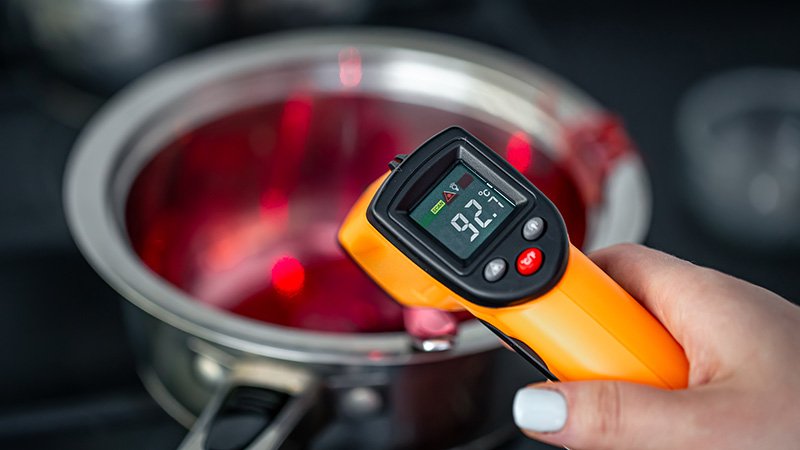
Getting inconsistent viscosity results? It's frustrating when your data is unreliable, potentially leading to costly batch failures and damaging your product's reputation. The solution is precise temperature control.
The three main temperature control solutions for a rotational viscometer are a thermostatic water bath for routine QC, an electric furnace for high-temperature materials like asphalt, and a Peltier system for rapid, precise heating and cooling in R&D applications.
I remember working with a client in the food industry. They were getting wildly different viscosity readings for their chocolate sauce. "Stefan, one day it's perfect, the next it's too thick. We haven't changed the recipe!" he told me. I asked about their process. It turned out they were measuring viscosity at ambient lab temperature, which fluctuated throughout the day. A small change in temperature was having a huge effect on their product. We integrated a simple thermostatic water bath, and their problem vanished. It’s a perfect example of why controlling temperature isn't an option—it's essential for getting data you can trust. Let's explore the systems that make this possible.
How does a thermostatic water bath provide stable viscosity readings?
Need consistent measurements for daily QC but have a tight budget? Inaccurate readings from temperature shifts can cause entire batches of product to be rejected, wasting time and money.
A thermostatic water bath achieves uniform temperature by using a heater and a circulator to continuously pump precisely heated fluid through a jacketed beaker or adapter. This constant flow ensures your sample is held at a stable, set temperature for reliable viscosity measurements.
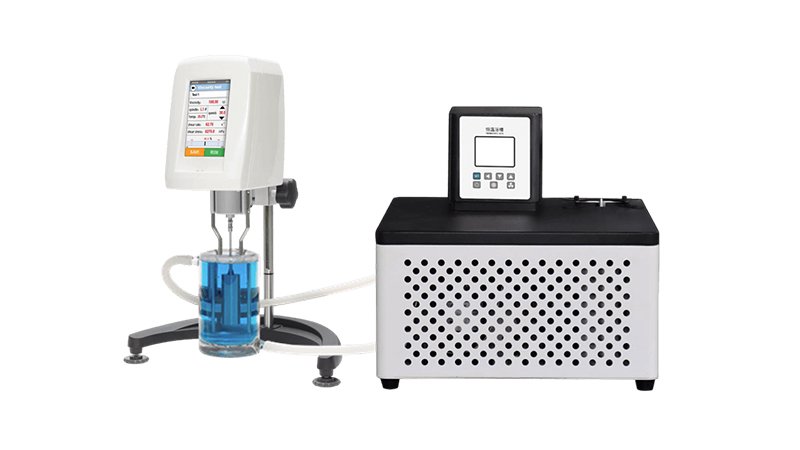
A water bath is a standard piece of equipment in many quality control labs. It offers a great balance of performance and price.
Working Principle and Key Components
The system's goal is to keep your sample at one constant temperature. It uses a reservoir of fluid, usually water or oil. A heater inside the reservoir warms the fluid. A controller measures the fluid's temperature and turns the heater on or off to keep it at the exact temperature you set. At the same time, a circulator, which is a small pump, constantly moves this fluid.
Setup and Integration
The setup is simple. Insulated tubes connect the water bath to your viscometer setup. You typically use a special beaker with a hollow wall, called a water-jacketed beaker. The warm fluid from the bath flows through this wall, surrounding your sample. This creates a "thermal jacket" that keeps the sample temperature very stable.
| Feature | Description |
|---|---|
| Advantages | Very stable (±0.1°C), low cost, and works well with standard, larger sample beakers. |
| Limitations | Slow to change temperature. The range is usually limited from just above room temp to 100°C. |
| Best For | Routine QC in industries like food, oil, and paints where tests are done at one temperature. |
When do you need an electric furnace for viscosity measurements?
Are you trying to measure the viscosity of molten plastic or hot asphalt? A standard water bath simply cannot handle these extreme temperatures, making measurement impossible and potentially dangerous.
An electric furnace uses high-power resistance heating elements inside an insulated chamber to reach extremely high temperatures. This allows you to measure the viscosity of materials like molten polymers, glass, or metals, which is impossible with other systems.
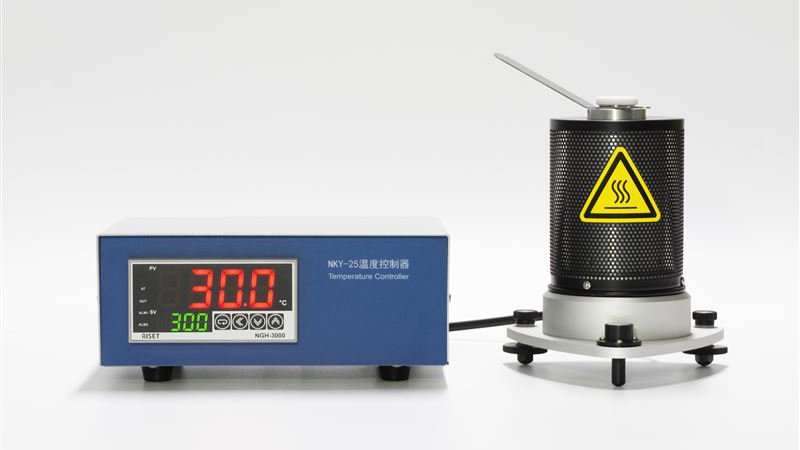
When your material is a solid at room temperature, you need a different kind of tool. Electric heating systems are designed for this.
Principle and System Design
These systems, often called 'Thermosel' style systems, use powerful resistance elements to generate heat, much like an electric oven. The sample is placed in a small, well-insulated chamber. A high-precision PID controller is very important here. It monitors the temperature and makes tiny adjustments to the power to keep the temperature extremely steady, even up to 300°C or higher. The viscometer itself is fitted with special spindles and sample holders made from robust materials that can withstand the heat.
Advantages and Challenges
The key advantage is obvious: you can measure things at very high temperatures. But this creates challenges. Operator safety is the number one priority. Also, you must ensure the small sample is heated evenly. For some materials that react with air, you can also fill the chamber with an inert gas like nitrogen to protect the sample from burning or changing. These systems are essential for industries that work with materials that are processed in a molten state.
| Category | Details |
|---|---|
| Primary Industries | Polymer manufacturing, asphalt/bitumen production, glass, and metallurgy. |
| Key Advantage | Access to extremely high temperature ranges (up to 300°C). |
| Main Challenge | Ensuring operator safety and uniform sample temperature. |
What makes Peltier control ideal for advanced R&D?
Do you need to see how viscosity changes as temperature ramps up or down quickly? A water bath is far too slow, meaning you miss critical data on your material's behavior.
Peltier temperature control uses a solid-state thermoelectric module to act as a heat pump, allowing for extremely fast, precise heating and cooling. This makes it perfect for advanced R&D, temperature sweep tests, and characterizing phase changes in sensitive materials.
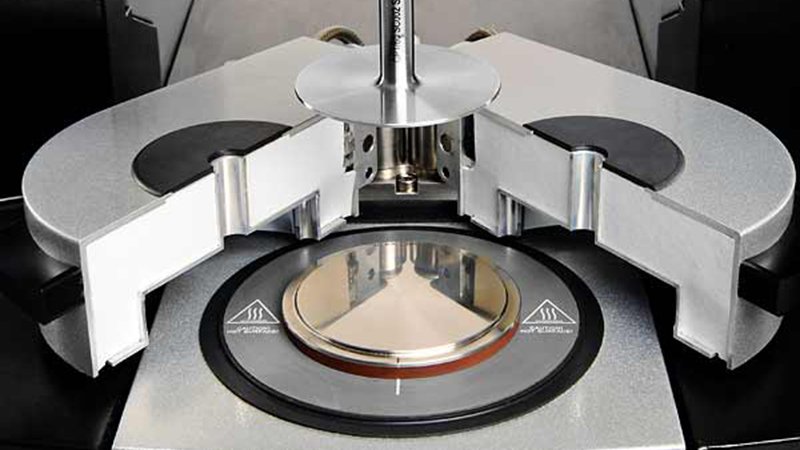
For research and development, you often need to do more than just hold a stable temperature. You need to control temperature changes dynamically.
The Peltier Effect and How it Works
A Peltier module is a small, solid-state electronic device. When you apply a DC current, it moves heat from one side of the device to the other. One side gets hot, and the other side gets cold. It acts like a heat pump with no moving parts. If you reverse the current, it reverses the flow of heat. This unique ability allows it to switch from heating to cooling almost instantly.
Advantages and Applications
This technology offers huge benefits. It allows for very fast temperature changes, called ramping. It is also extremely precise, often holding temperature within ±0.05°C. The design is compact and built directly into the viscometer's sample stage, so you don't need any circulating fluids or external baths. This allows it to operate over a wide range, including below room temperature. Its main limitation is that it works best with small sample volumes. This makes it a perfect partner for cone and plate or coaxial cylinder viscometers. It's the ideal tool for researchers studying how materials change with temperature, like finding the gel point of a hydrogel or the curing profile of an epoxy.
Conclusion
Choosing the right temperature control—water bath, furnace, or Peltier—is essential for accurate viscosity data. Match the technology to your specific application, sample type, and temperature range.