

You're confused by the terms "Rotational" and "Brookfield" viscometers. Choosing incorrectly means inaccurate results and wasted budget. Understanding the core differences ensures you get the right instrument for your needs.
"Brookfield" is a brand often used to describe simple rotational viscometers with T-bar spindles, ideal for comparative QC tests. "Rotational viscometer" is the broader category. Choosing depends on if you need simple QC checks (Brookfield-style) or precise shear rate data (cone and plate, cup and bob).
The biggest confusion comes from the name. "Brookfield" is a famous brand, but their original viscometer design is now a general type. I often explain this to customers, like my distributor friend Jacky from Italy. They think they are different categories, but one is a type of the other. It's like asking for the difference between a "car" and a "sedan." One is the general group, and the other is a specific style within that group. Let's clear this up so you can decide which style is right for you.
What's the Real Difference Between "Rotational" and "Brookfield"?
The names "Rotational" and "Brookfield" are often used interchangeably, creating confusion. This can lead to a poor purchasing decision. Let's clarify: one is a category, the other a type.
A "rotational viscometer" is any device that measures viscosity by rotating a spindle in a fluid. "Brookfield viscometer" commonly refers to a specific, simpler type with spindles (like T-bars or discs) dipped directly into a beaker, great for relative measurements.
A rotational viscometer works on a simple principle. It measures the torque, or rotational force, required to turn a spindle in a fluid at a specific speed. Higher viscosity fluids require more force to turn the spindle, and the instrument translates this into a viscosity value. This is the umbrella category. Within this category, there are several distinct types. The "Brookfield-style" viscometer is the most common type people think of. It uses various spindles (discs, T-bars) that are dipped into a sample in a beaker. Its geometry is not well-defined, so it's best for relative measurements—comparing one batch to another. Other types, like the cone and plate or cup and bob viscometers we manufacture at Martests, have very precise geometries. This allows for absolute viscosity measurements at specific shear rates.
The Family of Rotational Viscometers
| Viscometer Type | Measures | Typical Use | Shear Control |
|---|---|---|---|
| Brookfield-Style | Relative Viscosity (cP) | Quick QC, batch comparison | Not well-defined |
| Cone and Plate | Absolute Viscosity (cP) | R&D, high shear testing | Precisely controlled |
| Cup and Bob | Absolute Viscosity (cP) | Low viscosity fluids, suspensions | Precisely controlled |
When Should You Choose a Brookfield-Style Viscometer?
You need quick, repeatable quality control tests on your production line. A complex research instrument is too slow and expensive. A Brookfield-style viscometer is often the perfect, simple solution.
Choose a Brookfield-style viscometer for routine quality control where you compare batches to a standard. It's great for checking things like sauces, lotions, or paints quickly and easily, without needing absolute viscosity values or defined shear rates. It answers "Is this batch okay?"

This is the workhorse of many QC labs. Imagine you're making ketchup. You don't need to know the absolute viscosity to ten decimal places. You just need to know that today's batch is the same thickness as yesterday's perfect batch. This is where the Brookfield-style excels. You use the same spindle, the same speed, and the same temperature for every test. If you get the same viscosity reading, the batch passes. It’s a fast, simple, and effective way to ensure product consistency. My distributor, Jacky, sells many of these to food and cosmetics companies. Their main goal is consistency. The end-user doesn't care about the exact shear rate; they just want their favorite lotion to feel the same every time they buy it. This viscometer type helps manufacturers deliver that promise.
Key Advantages for Quality Control
| Advantage | Explanation |
|---|---|
| Ease of Use | Simply dip the spindle into a beaker of the sample and press start. Minimal training is needed. |
| Speed | Setup and cleanup are very fast, allowing for high throughput of samples on a busy production day. |
| Cost-Effective | Generally, these instruments have a lower purchase price than more specialized systems. |
| Versatility | Can be used with large sample volumes and can handle samples with larger particles that might not fit in other systems. |
When is a Different Rotational Viscometer a Better Choice?
Your simple viscosity test says a product is fine, but it fails in the field. Your test isn't giving you the full picture. You need an instrument that provides more detail.
Choose a cone and plate or cup and bob viscometer when you need precise, absolute viscosity data at specific shear rates and temperatures. This is critical for R&D, product formulation, and applications where performance under stress (like pumping or spraying) is key.
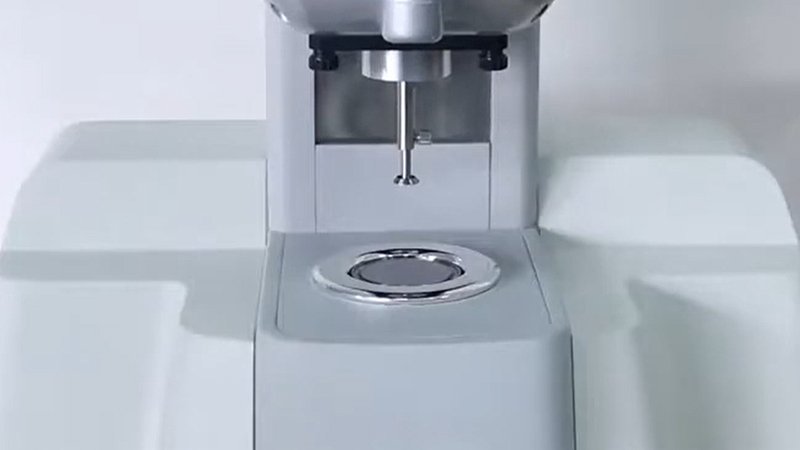
This is where my insight about application versatility becomes critical. Sometimes, a simple QC check isn't enough. For example, in lubricant development, you must know how the oil behaves at the high shear rates and temperatures inside an engine. A Brookfield-style test can't simulate this. You need a cone and plate viscometer. It uses a very small gap and precise geometry to apply a specific, uniform shear rate to the sample. This tells you exactly how the fluid will perform under stress. This is crucial for R&D and for creating products that meet tough industry standards. Cup and bob systems are also great for this, especially for lower viscosity fluids or samples that might settle, as the cup-and-bob design helps keep particles suspended during the test. For any application that involves pumping, spraying, coating, or mixing, understanding viscosity at specific shear rates is essential for success.
Applications Requiring Precision
| System Type | Best For | Why? |
|---|---|---|
| Cone and Plate | High shear rate testing, small/expensive samples (R&D, inks, coatings). | Requires a tiny sample volume (under 2mL) and can simulate high-stress conditions accurately. |
| Cup and Bob | Low viscosity fluids, suspensions, volatile samples (solvents, milk, drilling muds). | The "cup" design minimizes solvent evaporation and the larger geometry is better for materials with particles. |
How Do They Compare on Price and Ease of Use?
You need to balance your budget with your lab's technical skills. Buying the wrong viscometer means it's either too expensive or too complicated. Understanding the trade-offs helps you choose wisely.
Brookfield-style viscometers are generally less expensive and easier to use for basic tests. Cone and plate or cup and bob systems cost more and require more training due to their precision, temperature control, and software.
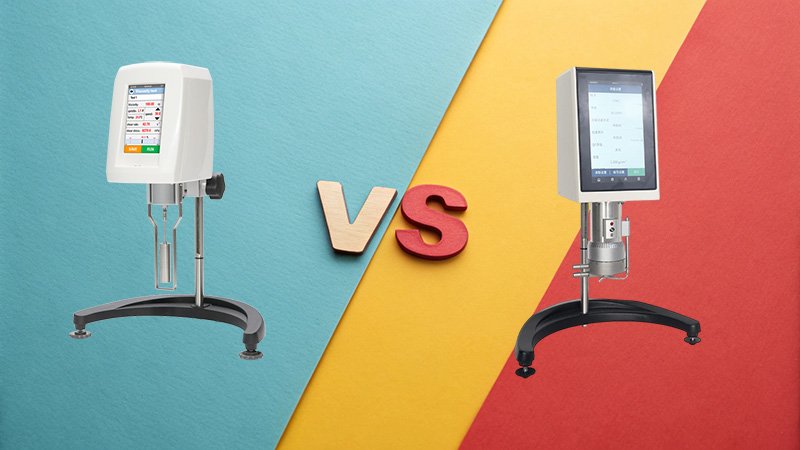
For purchasing managers and distributors like Jacky, this is a key conversation. The right choice depends entirely on the end customer's application and budget. A small food producer who just needs to check sauce consistency doesn't need a $20,000 research-grade instrument. A simple, robust Brookfield-style viscometer is the perfect fit. However, a pharmaceutical company developing an injectable drug needs the precision and data traceability of a cone and plate system with compliant software; for them, the lower-priced option is not an option at all. As a manufacturer, we offer a range of products because we know there is no single "best" viscometer. The goal is to provide the fittest viscometer for the job. Thinking about the total cost of ownership, including training and maintenance, is just as important as the initial price.
A Quick Comparison
| Factor | Brookfield-Style | Cone & Plate | Cup & Bob |
|---|---|---|---|
| Initial Price | Lower | Higher | Higher |
| Ease of Use | Very Easy | Moderate | Moderate |
| Data Type | Relative Viscosity | Absolute Viscosity | Absolute Viscosity |
| Typical Application | Routine QC | R&D, High Shear | R&D, Low Viscosity |
| Sample Volume | Large | Very Small | Small to Medium |
Conclusion
The "best" viscometer depends on your application. Choose a Brookfield-style for simple QC and a cone/plate or cup/bob system for detailed R&D and precise performance data.